
What North Carolina's Election Means for Data Centers and Your Power Bill

What North Carolina's Election Means for Data Centers and Your Power Bill
On Tuesday, North Carolina voted, and the fight over data centers was on the ballot in everything but name. From the U.S. Senate race to county commissions, the winners who spoke about data centers mostly said the same thing in different words: growth is fine, but households and small businesses should not pay for it.
None of this is final yet. The results stay unofficial until the state certifies them on November 13, and as of Thursday the Associated Press had called nine of North Carolina's fourteen House races, all for Democrats, the same nine Decision Desk HQ had called; the closest ones could still end up in recounts. Plenty of winners never said anything findable about either topic, so this sticks to the people who did speak, in their own words.
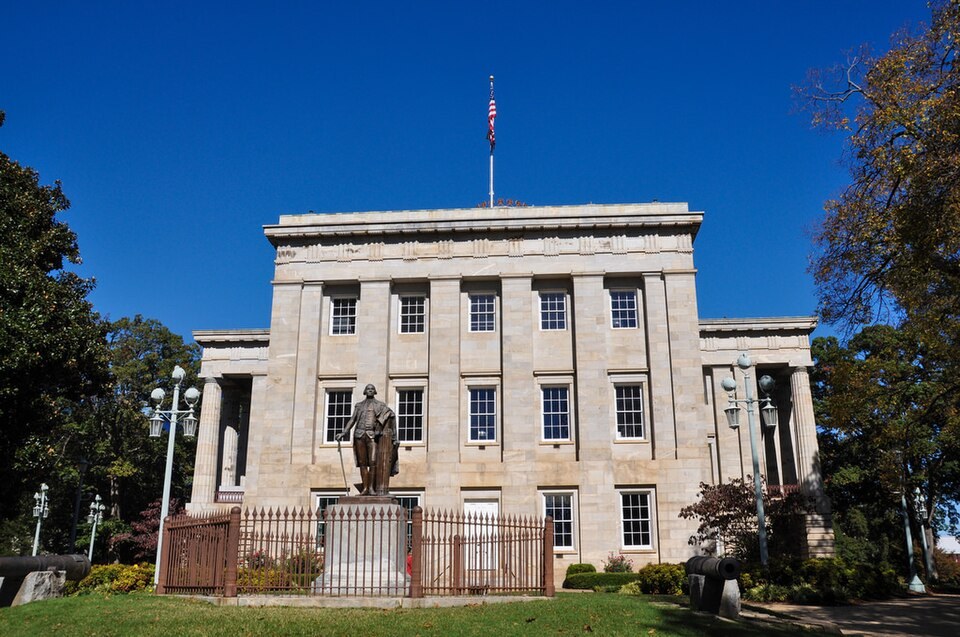 The North Carolina State Capitol in Raleigh. Photo by Bz3rk, CC BY-SA, via Wikimedia Commons.
The top of the ticket: pay your own way
Roy Cooper, the Democrat who won the U.S. Senate race, ran on the pay-your-own-way argument. His campaign told Fox News Digital in September: "Roy believes local communities must have the final say on new projects coming to their area, which includes local moratoriums, and data centers must pay for all of the energy they use without passing on any of their costs to consumers."
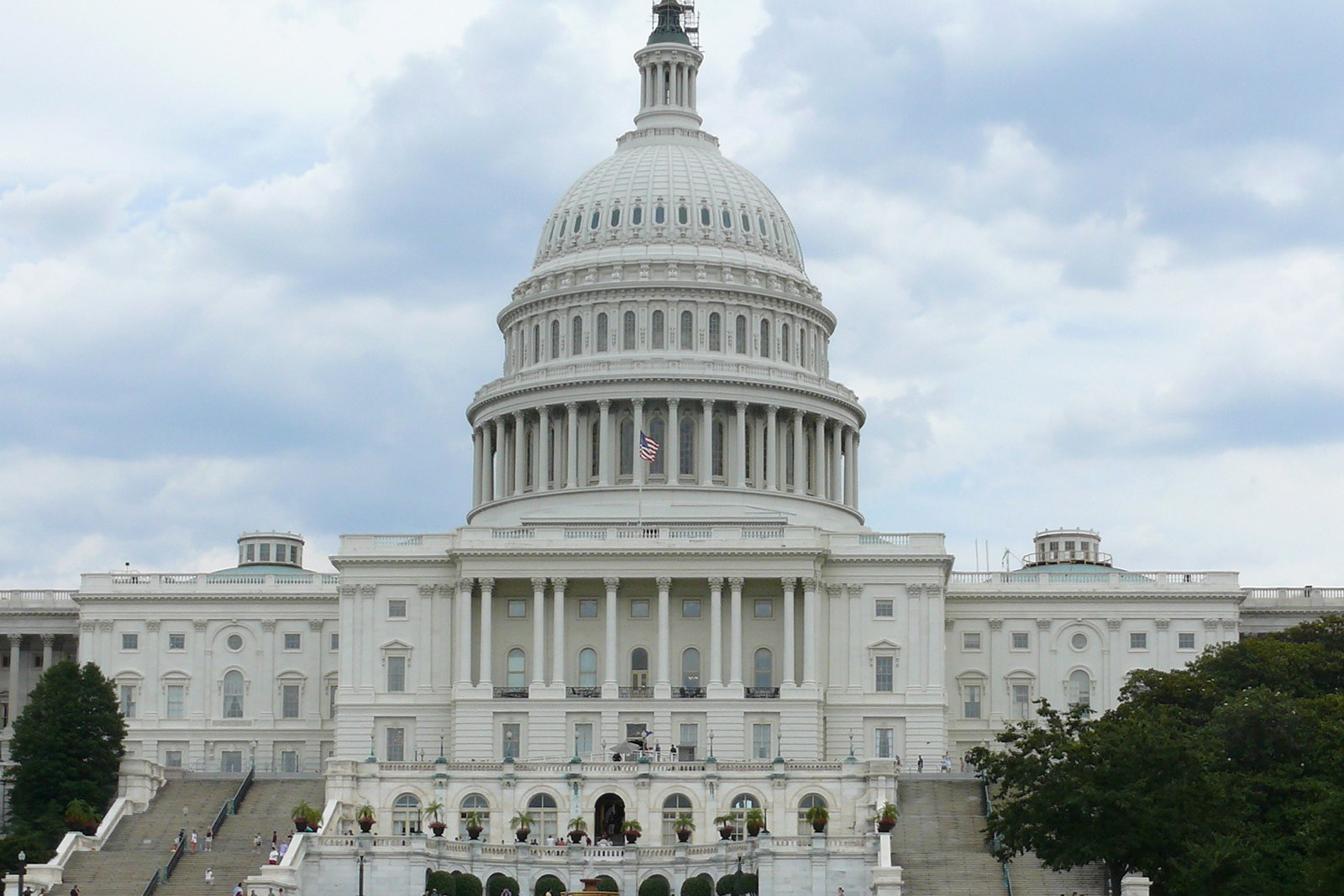 The U.S. Capitol in Washington. Photo by Ad Meskens, cropped from the original, via Wikimedia Commons.
In Greensboro in October, Cooper told Cardinal & Pine it was important "to put guardrails in place to protect people" from fast-moving AI. What he has not done, on the available record, is take a position on the deal that matters most right now: Duke Energy's October 7 large-load tariff settlement, awaiting a Utilities Commission decision expected by mid-November. His defeated opponent, Michael Whatley, favored tax breaks to attract data-center development. Voters picked the pay-your-own-way side.
Washington: measure it, label it, stay suspicious
Valerie Foushee, re-elected in the 4th District, holds the strongest AI record among the House winners. In June, the House Science Committee advanced her bills on AI-generated content labeling, frontier-AI safety testing, and measuring data centers' energy and water use. "Artificial intelligence is moving quickly, and Congress has a responsibility to meet this moment," she said. "I'm also proud to have advanced measures that will improve federal capacity to test and evaluate frontier AI systems and measure the real energy and water impacts of data centers on our communities."
The freshest voice is Jamie Ager, who won the 11th District in the mountains. "I think that we need to be very suspicious of data centers, AI," he told NC Local days before the election.
Since election night, the picture has filled in further. Don Davis, called by Decision Desk HQ overnight and by the Associated Press on Thursday to hold the 1st District, co-led a September bill to reverse data-center tax breaks. "Why incentivize this right now?" he asked. Greg Murphy, leading the 3rd District by 233 votes, told the Daily Reflector in October that data centers are "a matter of national security" in the AI race with China, and that policymakers must ensure they "do not use up or taint our community's water supply, drive up energy costs and weaken our grid, or become noisy disturbances." Richard Ojeda, called by Decision Desk HQ on Wednesday morning to win the 9th District, told a Fayetteville Observer questionnaire the state should "stop handing tax breaks to industries like data centers while families struggle to pay the electric bill." And the 5th District is still too close to call; Chuck Hubbard leads by 99 votes, but at an October candidate forum, as reported by the Ashe Post & Times, he said a two-year moratorium could help ensure environmentally safe data center development, arguing that data centers put "forever chemicals" in waterways, raise electric bills, and produce noise "like beehives."
One vote deserves care. In September, the House voted 417 to 3 for the Ratepayer Protection Act, which would have regulators consider making large-load customers pay for grid upgrades built to serve them; all eight of North Carolina's re-elected incumbents voted for it. That is a vote about who pays for wires, not a position on moratoriums, the Duke settlement, or AI rules.
Raleigh: a new legislature, and four clear voices
Democrats reportedly won control of the state House for the first time since 2010 and broke the Republican supermajority in the state Senate, the legislature that writes statewide rules. Four winners spoke clearly during the campaign. They agree on the principle and differ on the tools.
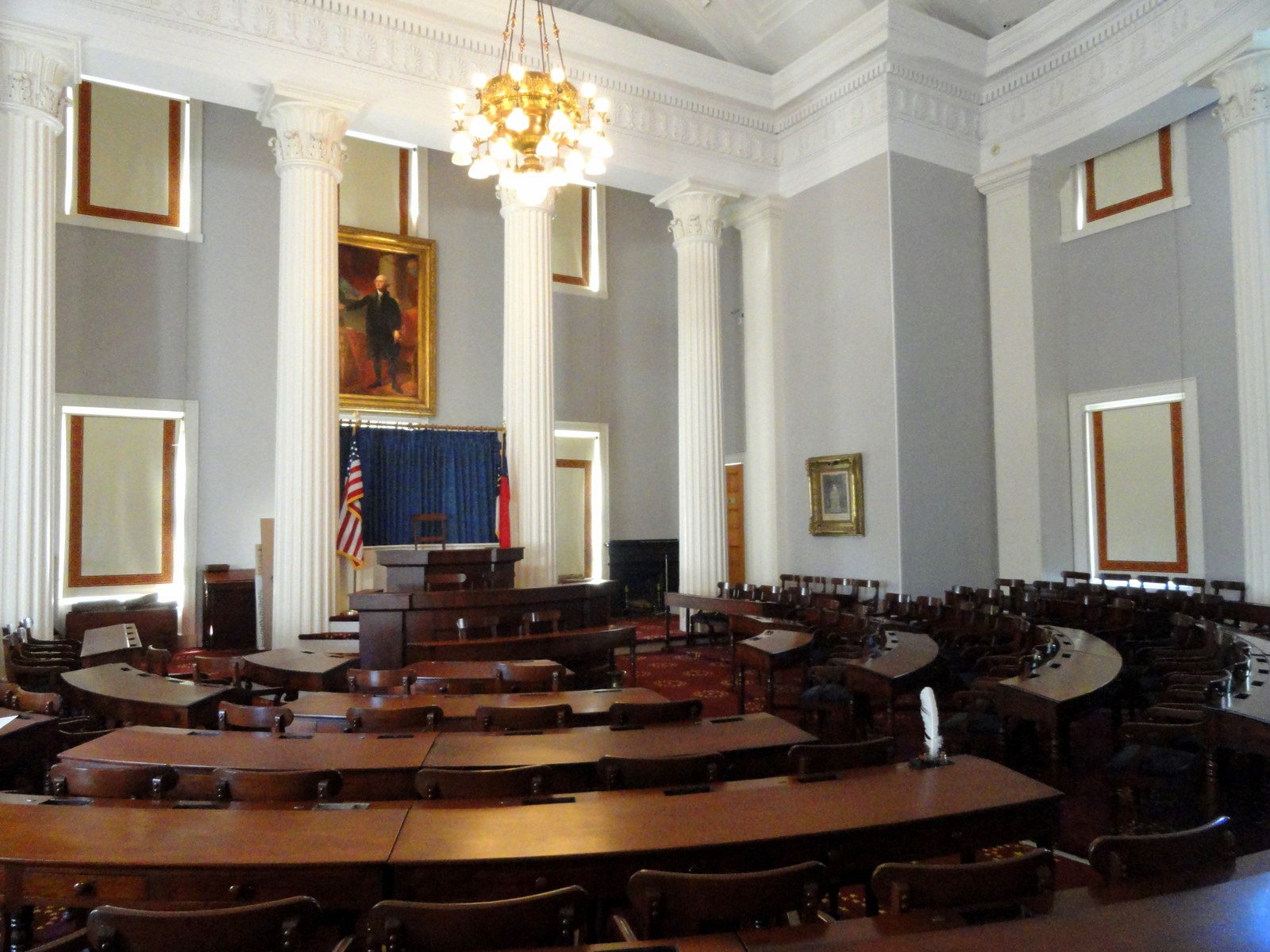 The historic House chamber at the North Carolina State Capitol in Raleigh. Photo by Daderot, public domain, via Wikimedia Commons.
Julie Mayfield, re-elected to the Senate from Buncombe County, opposes a statewide moratorium but wants minimum state standards on disclosure, water, energy, and noise, and drew the hardest line on costs: "Absolutely no cross-subsidization of new energy infrastructure to support data centers."
Lindsey Prather, re-elected to the House from Buncombe County, said she personally would welcome a moratorium but does not believe Raleigh should necessarily impose one statewide. Her framework: cost-based rates, full payment for utilities, at least 25 percent of a facility's peak demand generated cleanly on site, and no local tax incentives for data centers.
Janene Ackles, who defeated an incumbent in Cumberland County's 43rd District, called for safeguards before approval: "North Carolina should not rush into large data center development without strong safeguards in place. Where these facilities are located matters." She would require data centers to "pay their fair share of infrastructure and energy costs and provide clear projections of their expected electricity and water use."
And Winn Decker, who flipped a Wake County House seat, went furthest: "I support a statewide moratorium on data center permits pending a study of their impacts and clear regulatory requirements that protect taxpayers and neighborhoods."
Closer to home: the counties where the buildings go
The most concrete positions came from the local races, where the facilities would actually be built.
 Server racks. Photo by NOIRLab/NSF/AURA/T. Slovinský, CC BY 4.0, via Wikimedia Commons.
Mona Singh, the top vote-getter for Wake County Commission, supports moratoriums while the county assesses hyperscale facilities: "A single-hyperscale data center can consume resources needed for 100,000 households," she said. "This hurts affordability because of increased energy and water costs, while producing few jobs once the construction is done." On her campaign site, she also pledged to guide a county AI policy and support worker upskilling.
In Raleigh, Mayor Janet Cowell won re-election in a landslide after driving the city's six-month moratorium on new data centers over 10,000 square feet, enacted 7 to 1 in October. At a candidate forum, she said the city could use land-use, noise, and water rules but acknowledged municipal authority has limits, a reminder that city halls can't settle the power-cost question alone.
In Richmond County, where Amazon is building a $10 billion campus near Hamlet, Commissioner Justin Dawkins was re-elected after telling residents future companies "are going to pay their way when they come into Richmond County" and that he "would not support another incentive package for a data center." Dawkins had supported the Amazon package itself; his 2026 statements mark a shift on future incentives, and should be described as such.
In Davidson County, Dexter Short said, "I am against the citizens of this county having to subsidize any costs for Data Centers coming here." Matt Mizell's proposed county moratorium failed 3 to 3. In Pitt County, Dennis McLawhorn voiced support for a moratorium ahead of a November 16 hearing on a proposed one-year pause.
What voters did not decide
Despite a figure that circulated before the election, there were no data-center ballot measures in North Carolina; the "34 measures in 30 counties" count was national, covering eight other states. North Carolinians voted on three constitutional amendments instead, and all three passed.
 Casting a ballot. Photo by Element5 Digital, free to use via Pexels.
And the decision with the nearest deadline was not on any ballot: no winning candidate was found on the record about Duke Energy's October 7 tariff settlement. That ruling, expected by mid-November, will decide who pays for the power plants data centers require, the exact question the winning campaigns argued about in principle. Duke reported quarterly earnings Thursday, beating expectations. Davidson County commissioners vote on the Davie-Davidson gas-plant rezoning November 9. Pitt County holds its moratorium hearing November 16.
What it means for your business
The through-line is not that North Carolina said no to data centers. It is that the winners, from the Senate race to the county boards, said the costs must land on the companies building them, not on households and small businesses already paying power bills. The rules that turn that principle into practice are still being written: at the Utilities Commission, in the new legislature, and in county zoning rooms.
For a small business, energy costs and siting fights will keep moving, and AI tools will keep arriving whether policy is settled or not. The businesses that do well adopt AI deliberately, with guardrails, trained teams, and a human on the decisions that matter, instead of waiting for Raleigh or Washington to sort it out. We wrote about how to train employees on the limits of AI last week; the principle holds here too.
 Small business owners at work. Photo by Anthony Dalesandro, free to use via Pexels.
We help North Carolina small businesses put AI to work with guardrails: choosing the right tools, setting the rules for what goes in them, and training teams on where human judgment takes over. Reach out at https://www.mcmgs.com/contact; we reply within 24 hours.
North Carolina AI & tech news, translated into plain English.
At most twice a week, get the North Carolina technology shifts, grants, and practical automation guides that actually affect local businesses: what happened, what it means for you, and what to watch next. Stop with one-click unsubscribe or change your topics anytime.
Need Help Modernizing Your Operations?
Take our 2-minute interactive needs assessment and get a custom step-by-step action plan from McMillan General Services within 24 hours.